
Why NeuroNet Exists
The problem is not only signal analysis.
When a biological-signal workflow must withstand review, reuse, and verification across different contexts, the critical issue becomes the quality of its execution.
NeuroNet is the EEG-first governed-execution layer for biological signals: it makes workflows reconstructible, comparable, and defensible over time, constituting the governed substrate for downstream analytics and AI.
When Reconstruction Fails
In traditional pipelines, the path from input to output soon ceases to be
reliably reconstructible.
Fragile scripts, heterogeneous tools, and operational choices made outside a governed perimeter
slow down review, make reuse manual, and increase the cost of challenge.
NeuroNet anchors execution to defined conditions and to a verifiable chain of transformations.
When Comparability Fails
When executions cannot be compared coherently across sites, operators,
timeframes, or workflow variants, validation slows down and downstream trust weakens.
Comparability does not arise from final traceability alone: it depends on permitted execution conditions,
clear operational boundaries, and governed transformations from the outset.
NeuroNet makes executions comparable because it governs their validity, not only their final outcome.
When Accountability Fails
The critical issue is not only what output a workflow produces, but whether it is possible
to demonstrate which conditions guided its execution, what changed along the way,
and whether the workflow remained valid through to the final outcome.
When this layer is missing, the governance burden grows and the defensibility of the process weakens.
NeuroNet makes execution delimited, transformations traceable, and evidence verifiable and contestable.
What NeuroNet Makes Possible
NeuroNet does not replace downstream AI and is not reducible to an analysis layer.
It makes a workflow sufficiently governed to withstand review, reuse, and verification
even across different operational contexts, before, during, and after execution.
The result is a chain of governed artifacts for replay, review, verification, and reuse, including manifests, execution evidence, governed datasets, and epistemic outcomes.
How NeuroNet Works
An EEG-first governed execution architecture: it defines operating conditions, anchors traceable transformations, and emits reviewable evidence across the entire workflow.
Declarative and Deterministic Execution
The pipeline is defined declaratively: every step is explicit,
traceable, and verifiable, with no opaque logic or implicit dependencies.
Under the same conditions, NeuroNet preserves execution repeatability
and artifact consistency.
Modular and Governed Architecture
Filtering, cleaning, segmentation, controls, transformations, and export
operate as distinct units within a governed framework.
This makes it possible to extend the workflow without losing coherence,
operational readability, or control over execution.
Permitted Execution Conditions
NeuroNet does not merely process the signal: it determines whether a workflow
may proceed and under which operating conditions.
Constraints, thresholds, controls, and admissibility rules define the boundaries
of execution before any result is produced.
Internal Workflow Consistency
Segmentation, signal states, quality controls, transformations, and outcomes
must remain consistent throughout the entire chain.
This is not simple quality control: it is verification of the workflow’s internal consistency
against the conditions that govern it.
From Control to Evidence
NeuroNet organizes the workflow into progressive levels: integrity control,
structured findings, traceable transformations, and verifiable outcomes.
In this way, execution becomes more readable, more verifiable,
and easier to review over time.
Compatible with AI, Not Dependent on AI
The pipeline does not depend on artificial intelligence in order to remain valid.
When analytical components or models are integrated, they operate on top of
a workflow that is already governed, traceable, and reviewable.
Assisted, Not Opaque Orchestration
Any orchestration components do not replace workflow logic
or execution control.
NeuroNet keeps operational support, configuration,
and the actual validity of the pipeline clearly separated.
Verification, Replay, and Repeatability
Stability is not delegated to downstream manual checks.
NeuroNet supports verification, replay, and change control through
comparable artifacts, execution seals, pipeline bindings, and criteria for operational repeatability.
EEG-First, Extendable to Other Signals
NeuroNet is built on EEG, where complexity, review pressure,
and reconstruction cost make the problem immediate.
The same architecture is designed to extend, over time,
to broader categories of biological signals.
Infrastructure Designed to Scale
The goal is not to add complexity, but to preserve validity,
reviewability, and portability as the operational scope expands.
For this reason, NeuroNet can expand from a governed EEG workflow
into a broader infrastructure for biological signals.
Observation plan
Governed execution, structural observability
NeuroNet is an EEG-first infrastructure for governed execution of biological signals: it defines allowed operating conditions, grounds traceable transformations, and emits reviewable evidence across the workflow. On this basis, it enables a structural observation plan in which trajectories, indices, and levels of interpretation remain explicit, verifiable, and reproducible end-to-end.
Deterministic governance
Every step is declared, constrained, and reproducible, with no hidden behavior or operator-dependent variation. Outputs stay auditable, replayable, and comparable under the same conditions.
Beyond isolated features
Traditional features remain available, but NeuroNet adds a structural layer where interpretation is constrained by explicit, shared rules applied consistently across the workflow.
Trajectories, not isolated instants
The signal is observed not as isolated values, but as a trajectory evolving over time under declared conditions. The focus is structural behavior, not the single data point.
Epistemic indices
A family of indices built on frozen pipelines and declared specifications to describe complementary properties of system dynamics in a comparable, testable, and verifiable way.
Structural levels of interpretation
Interpretation is organized through explicit levels that constrain meaning: coherence, continuity, and significance are declared, verified, and applied, not assumed downstream.
Extends, does not replace
This plan does not replace existing analyses or define a separate analytics layer. It extends them within the same governed execution perimeter, preserving transparency, reproducibility, verifiability, and auditability across the system.
Same guarantees. Broader observability.
NeuroNet is the EEG-first governed-execution layer for biological-signal workflows. It makes workflows reviewable, replayable, and defensible by construction — the governed foundation on which downstream analytics and AI can operate.
Fields of Application (first wave)
NeuroNet starts as an EEG-first forensic governance layer and grows into a standard for biosignal intelligence. These are the first segments where a deterministic, audit-ready EEG process creates value — with additional markets lining up on the same infrastructure.
Research-grade EEG workflows
BeachheadHigh-complexity EEG workflows already under pressure to support review, reuse, and comparability, where the cost of reconstruction is high and execution validity must remain intact over time, across teams, versions, and operating contexts.
What NeuroNet brings
- A governed workflow package with bounded execution and verification.
- A portable review/replay bundle that reduces reconstruction burden and clarifies accountability.
- A chain of governed, cross-bound artifacts for replay, review, verification, and reuse.
Neurotech, BCI & Research Labs
Parallel R&DAcademic groups, BCI teams, and neurotech organizations working with high-complexity EEG workflows, already under pressure to support review, reuse, comparability, and verification. In these contexts, value lies not only in signal analysis, but in the ability to keep the workflow reconstructible, reviewable, and reusable over time, across teams, versions, and operating contexts.
What NeuroNet brings
- A governed workflow package with bounded execution and verification.
- A portable review/replay bundle that reduces reconstruction burden and clarifies accountability.
- A chain of governed artifacts for replay, review, verification, and reuse, including manifests, evidence outputs, and governed datasets.
Pharma, CRO & Forensic Review Workflows
High-Scrutiny EnvironmentsNeuroNet provides pharma sponsors, CROs, and medico-legal functions with an EEG-first signal governance infrastructure designed for reviewable, replayable, and defensible workflows across clinical studies, trial operations, and expert review settings with elevated documentation requirements.
Why NeuroNet
- Governs execution conditions, lineage, and workflow verifiability before, during, and after processing.
- Produces governed artifacts — including manifests, reports, seals, digests, evidence indexes, and portable review/replay bundles.
- Supports audit readiness, replay, comparability, and cross-context review without operating as a diagnostic layer.
Next markets on the same infrastructure
The same governed EEG layer naturally extends to additional segments as we scale.
Who is actually building this
NeuroNet is an EEG-first engine designed with the rigor of critical infrastructure: declarative pipelines, stable quality rules and continuous verification on every release. It is built for EEG labs, clinical centres and research groups that need technical traces and datasets able to withstand the scrutiny of clinical boards, ethics committees, industrial partners and investors.
Who is building NeuroNet
A compact core team at the intersection of neuroscience, AI and signal governance – designed to work with clinicians, research groups and investors, not to be a LinkedIn wall.

Davide Brugognone
Founder & CEO · Member, EIT Health Innovators Community
Creator of NeuroNet’s EEG-first governance layer, with 15+ years in IT across enterprise infrastructures, cybersecurity and software development. As the sole IT Manager for his department he designed and ran networks, business continuity and backup systems; as founder and architect he has built modular EEG pipelines, ML models and end-to-end AI prototypes, up to an EEG+AI architecture currently covered by a provisional patent filing with the USPTO.
- Architecture & product: designs NeuroNet as an infrastructure, not a one-off tool – declarative YAML pipelines, technical manifests, regression tests and hash-based traceability across the entire signal chain.
- Applied AI & engineering: hands-on experience developing AI/ML systems and in projects such as NeuroNet BCI for the “AI for Inclusion” hackathon and Project999 for the IPZS “Innovation Challenge”, combining signals, blockchain and intelligent models with strong focus on robustness and reproducibility.
- Ecosystem & community: member of the EIT Health Innovators Community and author of publications on cybersecurity and IT technologies, with a growing focus on aligning NeuroNet to the concrete needs of clinicians, researchers and industrial partners.

Barkha Khurana
Head of Artificial Intelligence & Neuroinformatics
AI & neuroscience specialist with 15+ years in academia and clinical-facing research, now PhD Research Scholar in AI Neuroinformatics at UMFST Târgu Mureș on an AI-based Neuro Information System for diabetic neuropathy. She connects EEG, neuroimaging and AI-driven pain models to build explainable tools for neurological disorders and chronic neuropathic pain.
- Clinical AI & pain intelligence: designs EEG-based chronic neuropathic pain prediction systems, deep-learning pain classifiers and decision-support models that integrate electrophysiology, symptoms and imaging.
- Scientific track record & teaching: 20+ publications, books and book chapters across neurology, physiotherapy and AI in healthcare, with awards such as Dynamic Professor of the Year, Innovative Professor of the Year and Academic Excellence.
- Neurodiagnostics & governance: hands-on experience across EEG, fMRI, NCV and MR neurography, including a record-length 4-hour MR neurography session, plus roles in research committees and the IEEE Brain Community that bring governance discipline into everyday lab practice.

Nitin Rodhia
R&D Engineer · Cognitive Microprocessors
AI SoC and neuromorphic hardware engineer with 15+ years across AI-driven SoC design and RF network optimisation, now focused on ultra-efficient compute for real-time EEG and bioelectrical analysis.
- AI SoC & chip design: RTL design and verification for AI/ML accelerators and GPU cores, integrating ARM Cortex, PCIe and DDR controllers and driving timing-closure and PPA optimisation workflows.
- From RF to secure infrastructure: 12+ years in 3G/4G RF planning and optimisation, including leading CDMA projects with the Indian Army at high-altitude battlefields and receiving recognition from operators and vendors.
- Edge AI & BCI roadmap: research focus on AI chips, brain–computer interfaces and implantable neurotechnology, aligning NeuroNet’s future on-device and neuromorphic compute layer with its governed EEG stack.
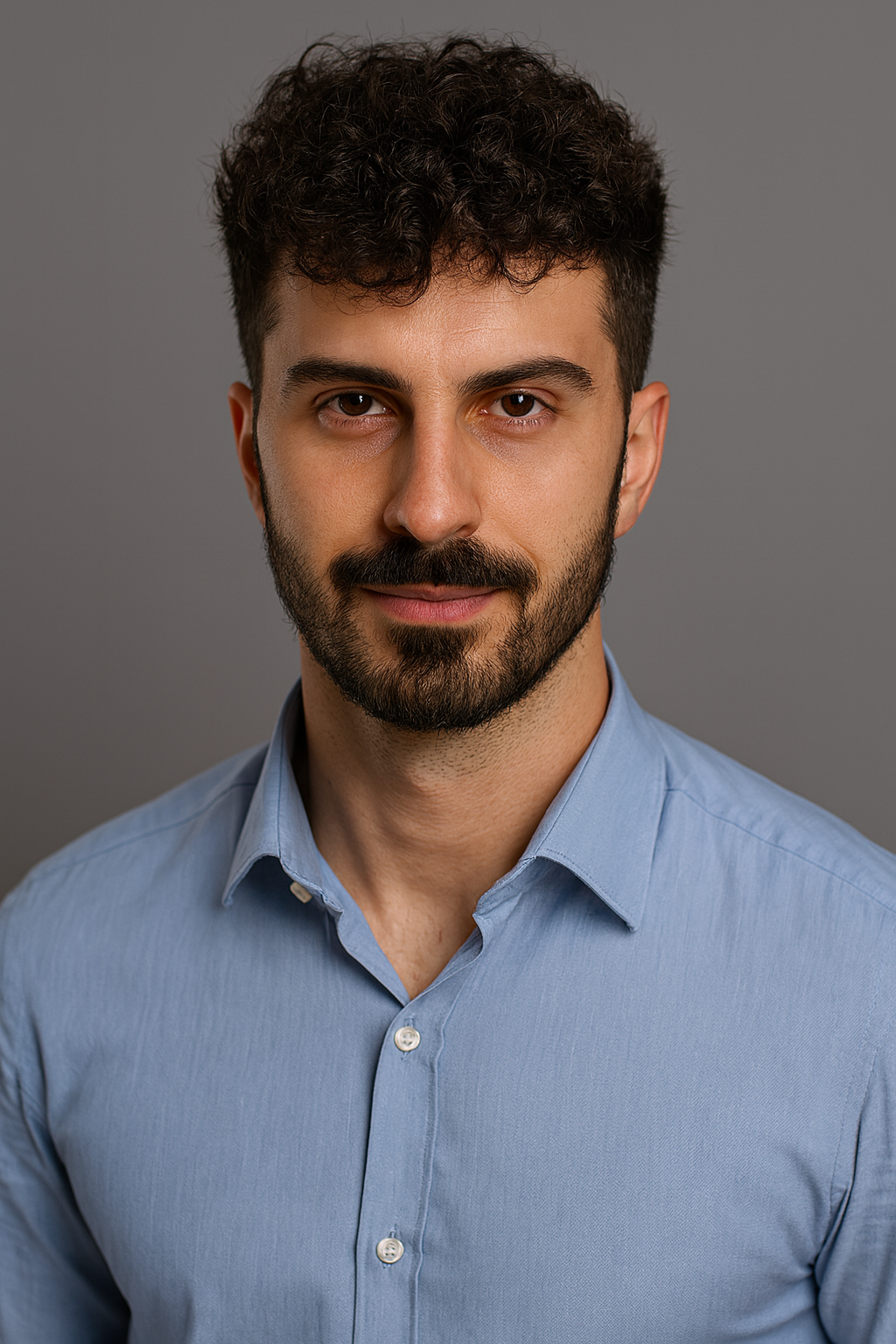
Davide Angelo Palmisano
Tech Evangelist & Strategic Communicator
Digital marketing and analytics specialist with experience leading global and national teams at AIESEC International and AIESEC Italy, and supporting AI-focused initiatives at Alterna International. He connects paid media execution, data pipelines and reporting to give NeuroNet a clear, measurable go-to-market engine.
- Global marketing operations: directed a virtual team of 25 marketers at AIESEC International, introducing A/B testing and predictive analytics, increasing leads by 13% and conversion rates by 22% while reducing data processing time by 60%.
- Performance & analytics: hands-on work with Meta Ads, Google Ads, Google Analytics, Looker Studio and UTM tracking to design dashboards and optimise funnels, including cases with 50% sales growth and a 55% faster lead-to-sale process.
- Background & training: studies in Marketing and Communication at La Sapienza (thesis on a government system based on blockchain), SQL training for data analysis and IBM Product Management coursework, fluent in English and Italian.
Around this core team we are progressively assembling a focused scientific and clinical advisory layer — neurologists, neurophysiologists and regulatory specialists — to guide how NeuroNet’s EEG governance engine is validated, deployed and scaled.
What you can do now
Three ways to plug into NeuroNet today — depending on whether you run a lab, back infrastructure, or build.
Run a forensic-grade EEG PoC
For hospital EEG units, tele-neuro networks and research groups that want deterministic preprocessing, QC and chain-of-custody on real-world EEG — without touching diagnosis.
- Define a YAML-based EEG pipeline on your own data (filters, QC, segmentation, features).
- Get a forensic technical pack: manifests, hashes, QC metrics, effective config.
- Start small: a focused pilot on a subset of studies, not a marketing demo.
Back the governed-execution infrastructure
For investors and strategic partners who see EEG-first governance infrastructure as the missing layer for accountable biological-signal workflows: deployable, reviewable, replayable execution — not another opaque AI application.
- Understand the infrastructure thesis: EEG-first today, architecturally extensible across biological-signal workflows.
- Review the path to external repeatability, portable review/replay bundles, and repeatable deployment.
- Explore co-designed deployment paths across clinical, pharma, and neurotech environments.
Join the builders
For people who build: signal engineers, clinicians, AI researchers, hardware and product profiles who want to shape how biosignals are governed and computed.
- We look for people who have already shipped things: code, papers, products or systems.
- Profiles spanning EEG / signal processing, explainable AI, edge / neuromorphic compute, clinical neurophysiology, regulatory.
- From deep technical contributions to focussed collaborations on PoCs and research.
We read and respond personally. No mailing lists, no automated funnels.
 #12 Preventive Healthcare Global
 Top 10 BCI Global
 Google for Startups Cloud Program
 Venture Builder Program · Master Recreation Labs 2024–2027